The 8:10 Rickshaw.. ஒத்திப் போ ஒத்திப் போ.. கொஞ்சம் ஓரமா ஒத்திப் போ!
டூவீலர்களிலும் கார்களிலும் சிட்டாகப் பறக்கிறார்கள் பள்ளிச் சிறார்கள்.. கூடவே ஆட்டோக்களும் இன்று பள்ளிச் சிறார்களின் உற்ற தோழனாக இருப்பதையும் மறந்து விட முடியாது. பள்ளிக்காலத்தில் நாம் பயன்படுத்திய அந்த ரிக்ஷாக்களையும், ஆட்டோ ரிக்ஷா பயணங்களையும் அத்தனை சீக்கிரம் மறந்து விட முடியாது.
அப்படி ஒரு மறக்க முடியாத ஆட்டோ ரிக்ஷா பயணம் குறித்து வ. துர்கா தேவி எழுதியுள்ள அழகிய கட்டுரை இது.. நீங்களும் உங்களது பள்ளிக்கால ஆட்டோ நினைவுகளில் மூழ்க தொடர்ந்து படியுங்கள்:
My early schooling began in what was then the first CBSE school in the northern part of the old North Arcot District, in Vellore. Until the fifth standard, that school formed the entire world of my childhood learning.
Those were years filled with simple routines and quiet achievements. I was usually among the top students in my class—sometimes the topper, sometimes the one just behind. Occasionally Rajesh, a delightfully chubby and cheerful boy, would secure the first place. Even then, the second place seemed to settle comfortably with me.
School life was not merely about ranks. I still remember the pride I felt when I was chosen as the school pupil leader in those early classes. To a child, such moments feel like great honours.
Our school was close to home then. During lunch break, we would run back home where my mother would already have the rice ready for us. We would eat quickly, wash our faces, and rush back to school again. Not once do I remember us being late.
But after the fifth standard, things changed.
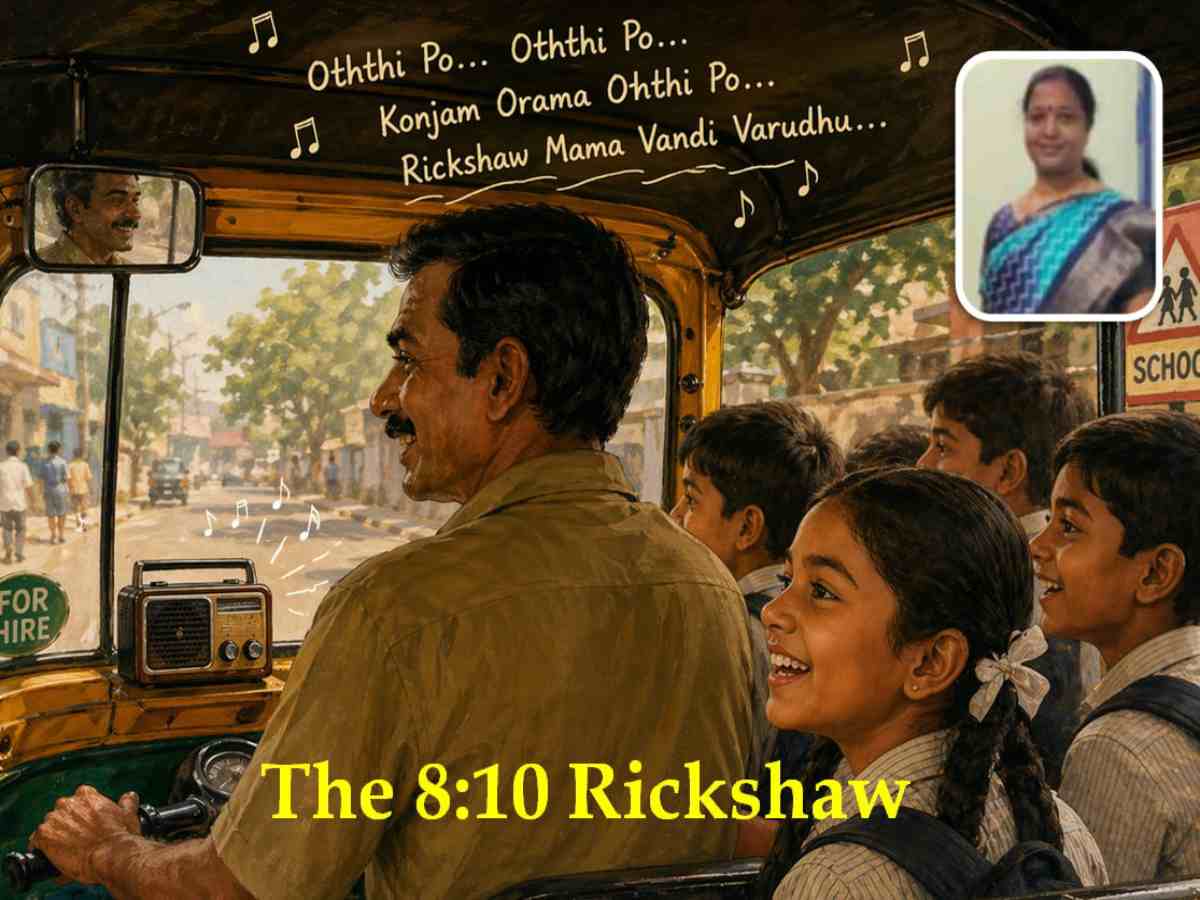
The higher classes of that CBSE school were nearly fifteen kilometres away. In those days, the streets were not filled with school buses the way they are today. Transportation itself was a challenge. Considering the long distance, my father decided to admit me to a convent school where my elder sister was already studying.
The new school was about three or four kilometres away from home. For this journey, my father arranged an auto-rickshaw.
The driver was Rahim Uncle.
To the outside world he was simply an auto driver, but to us he was someone much more familiar — a gentle guardian who safely carried a group of schoolchildren every day.
I usually travelled in the 8:10 morning trip, while my elder sister preferred the 8:45 batch. Rahim Uncle would first drop me and the younger children at our school, then return to pick up the next group.
Almost ten to twelve of us would squeeze into that auto-rickshaw each morning.
Looking back now, that little ride was one of the most cheerful parts of my childhood.
Rahim Uncle kept a small radio inside the auto. Many mornings began with a lively song playing through its tiny speaker — the popular line from the film Rickshaw Mama:
“Oththi Po… Oththi Po… Konjam Orama Oththi Po…
Rickshaw Mama Vandi Varudhu…”
The moment that song played, the ride felt even more joyful.
For me, this change in school life brought a different rhythm to my day. Every syllabus, I later realised, has its own purpose and beauty. Each one is carefully designed to suit the learning needs of students at that stage of their education.
Coming from one system to another simply meant adjusting to a new pattern of learning. The subjects were organised differently, the textbooks had a different style, and the school routine flowed in its own way. I soon found my rhythm there too.
Among the students who travelled with me was Kanmani Akka, a classmate of my sister. She remains unforgettable in my memory, especially because of her long, thick plait. Even when it was folded twice and tied, it still looked wonderfully heavy and long.
During the auto rides she would almost always be reading something — a notebook, a textbook, or some revision notes. She would move from one book to another with quiet determination.
While others read, I often preferred to watch the world outside.
Small roadside shops opening for the day, people walking briskly to work, vegetable vendors arranging their baskets — these little glimpses of everyday life fascinated me more than anything else.
One particular morning, however, turned that ordinary ride into a memory that stayed with me forever.
That day the auto was more crowded than usual. Some students who normally travelled in the 8:45 batch had joined the earlier trip because they needed extra time at school to practise a dance for an upcoming program.
Since I was the smallest among them, I was made to sit on Kanmani Akka’s lap. She held me securely around my waist with one hand, while the other hand still held a notebook she was studying.
Everything happened in a matter of seconds.
A small child suddenly ran across the road without warning.
To avoid hitting the child, Rahim Uncle pressed the brakes hard.
The auto came to a sudden halt.
The jerk threw me backwards out of the auto-rickshaw.
I landed on the road behind it.
The rough surface scraped my back and legs, and my lips began to bleed. My face quickly turned swollen and red.
Rahim Uncle immediately stopped the auto. The older students rushed toward me, worried and frightened.
But in my childish mind, only one thought mattered.
I had never missed school.
My attendance had always been perfect.
So even while wiping the blood from my lips, I insisted that someone simply buy some ointment from the nearby medical shop and take me to school.
Going home did not even occur to me as an option.
Rahim Uncle, however, was wiser.
He first dropped all the students safely at school and informed the teachers about what had happened. Only after that did he bring me back home.
When we reached my house, he looked deeply anxious. My face was swollen and bruised, and he feared my mother would scold him.
But my mother responded with a calmness that I understand only now, many years later.
She did not shout.
She did not accuse him.
She simply asked what had happened, thanked him for bringing me home safely, and immediately took me to the nearest hospital.
She knew the care with which Rahim Uncle drove and how sincerely he treated every child as if we were his own.
Meanwhile, my concern remained entirely different.
Since half the school day had already passed, I kept asking my mother to take me back to school in the afternoon.
The doctor, however, firmly instructed that I should take complete rest that day.
And so, for the very first time in my life, I stayed home for an entire school day.
The next morning, though, I made sure I was the very first child waiting for the 8:10 auto-rickshaw.
Even today, as a teacher, when I think about that incident, what stays with me most is not the fall, the injuries, or the missed school day.
It is my mother’s quiet wisdom.
In moments of fear or anger, it is easy to blame. But she chose understanding instead. She recognised the sincerity of the man who had been entrusted with the safety of so many children.
Without drama, without accusation, she handled the situation with grace and dignity.
And in doing so, she taught me a lesson that no classroom ever could.
(About the Author: Durgadevi V, Graduate Teacher, GHS Nesal, Tiruvannamalai District)
சமீபத்திய செய்திகள்
பட்டினப்பாக்கத்தில் தலைமை செயலகம் கட்டினால்...என்ன அதிமுக ஜெயக்குமார் இப்படி சொல்லிட்டார்?
மதுரை அரசாளும்.. மீனாட்சி அம்மன் கோவில் கும்பாபிஷேகம்.. 17 ஆண்டுகளுக்குப் பிறகு!
முதல்வர் விஜய் குறித்து அவதூறு பேச்சு: சேகர்பாபு, ஆ.ராசா மீது வழக்குப்பதிவு
சிவன்மலை ஆண்டவர் உத்தரவுப்பெட்டியில் தேங்காய் வைத்து பூஜை...இது நடக்க போவது உறுதியா?
திமுக தலைவர் மு.க.ஸ்டாலினுக்கு வைரஸ் காய்ச்சல்: திமுக முப்பெரும் விழா ஒத்திவைப்பு!
காலம் மாறிப் போச்சு.. ஒரு நிமிடக் கதை (17)
அரும்பானவள் கொஞ்சம் குறும்பானவள்!
மணவாழ்க்கை.. துணையாள் சொல்படி நட!
சிந்தனைச் சிதறல்.. நல்லவர்களாக இருங்கள்.. நற்சிந்தனையோடு இருங்கள்!
{{comments.comment}}