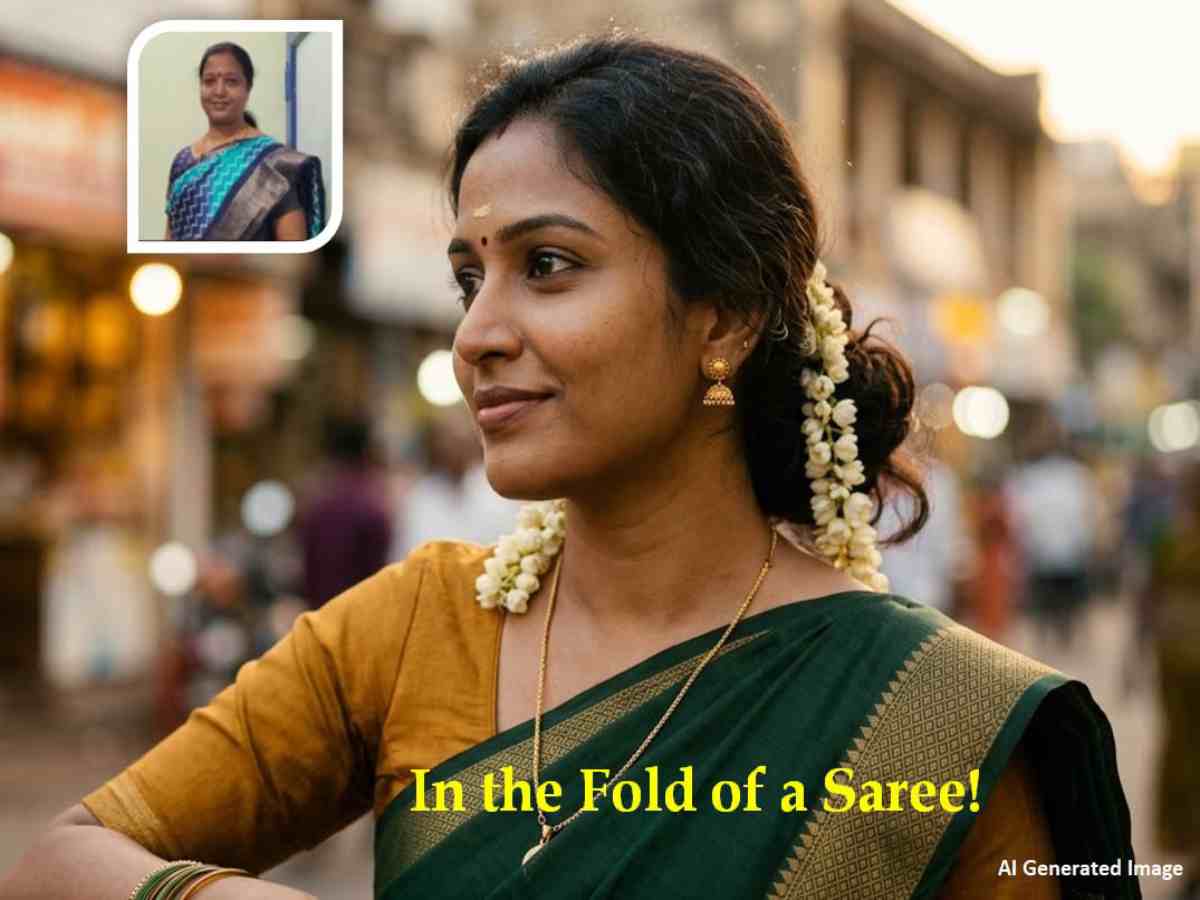
கட்டும் சேலை மடிப்பினிலே.. In the Fold of a Saree!
- வ. துர்காதேவி
சேலை என்பது வெறும் துணி அல்ல; அது ஒரு உணர்வு. இந்தியப் பண்பாட்டின் அடையாளமாகவும், கலைநயத்தின் உச்சமாகவும் திகழும் இந்த ஆடை, உலகிலேயே தையல் இல்லாத மிக நீண்ட, மிக அழகான ஆடையாகக் கருதப்படுகிறது.
ஒரு பெண்ணிற்கு இயல்பான அழகையும், அதேசமயம் ஒரு கம்பீரமான தோற்றத்தையும் தருவதில் சேலைக்கு நிகர் ஏதுமில்லை. திருமண வைபவம் முதல் அலுவலகப் பணி வரை, எந்த இடத்திற்கும் ஏற்றவாறு நம்மை மாற்றிக்காட்டும் வல்லமை இதற்கு உண்டு.
இந்த சேலையை வைத்து அழகிய காவியத்தையே தீட்டியுள்ளார் நமது வ. துர்காதேவி. படிக்கப் படிக்க நீங்களும் உங்களது சேலை நினைவுகளில் மறைந்து போவீர்கள்... வாங்க படிக்கலாம்.
A saree was never just something I wore.
Even before it touched my skin,
it had already entered my life—
quietly,
like a memory waiting to happen.
I remember watching—
my mother,
my mother’s younger sister,
my grandmother,
my aunts—
moving through their days
wrapped in an ease I did not yet understand.
They did not try to be graceful.
Grace simply stayed with them.
In those days,
a saree was never bought in haste.
It arrived with festivals,
with family,
with time that allowed us to pause.
We stood together in shops,
hands moving across colours,
voices blending in soft arguments,
choices made not by one,
but by many hearts.
I remember trends—
the Anjali saree,
repeated everywhere.
Yet even then,
something within me resisted sameness.
I wanted my people
to stand apart—
to be remembered,
not repeated.
And there were those women
who came to our doorsteps,
carrying sarees in quiet bundles,
offering them in small, gentle payments—
bringing colour
into homes
that measured every expense.
Without knowing it,
I was learning—
that a saree is never just fabric,
but a slow-growing feeling.
As years passed,
I began to see people
not by names,
but by colours.
Fridays unfolded in yellow and red,
temples turning into living canvases.
My mother—bright colours,
alive, radiant,
impossible to overlook.
My chitti—parrot green,
fresh as morning,
unchanging in its charm.
A neighbour akka—
always in classic western shades,
quiet, composed,
elegant in her difference.
My perima—magenta,
firm, familiar,
constant in memory.
My athai—silk, always silk,
colours that held a certain pride.
My grandmothers—
dark sarees,
strong enough to carry
an entire day’s labour.
Somewhere in all this,
I understood—
a saree does not follow a person,
it becomes one.
Being from a silk-weaving family,
silk was never just fabric for us—
it was part of our living.
Even a cradle
was not left untouched by it.
We tied our cradles
in soft silk sarees,
as though even a newborn
deserved to be held in grace.
I still remember—
as fresh as breath—
placing my akka’s daughter,
just three days old,
into that silk-wrapped cradle.
She lay there,
so small, so new,
resting on softness
woven by hands like ours.
And my appa—
standing beside,
his eyes filled,
not with words,
but with pride—
looked at his granddaughter
as though the world
had quietly gifted him
something beyond measure.
That moment—
silk, cradle, child, and his gaze—
still lives within me,
unfaded.
And then,
life brought the saree to me.
Not with preparation.
Not with certainty.
I had never worn a saree
until my wedding.
And the very next morning,
I wore it wrong.
The pallu rested on the right—
as though I had not yet learned
the direction of belonging.
My mother-in-law laughed,
not in correction,
but in warmth—
and gently turned me
towards tradition.
That was where I began.
But within that beginning,
there was an absence.
My father was not there.
He had always seen me
as something delicate,
something rare—
his own angel.
And I often wonder—
if he had chosen a saree for me,
it would not have been
what others chose.
He would have searched
for something soft—
perhaps marble chiffon,
flowing, weightless—
in western shades,
subtle, different,
like how he always saw me.
He would not have chosen
like my mother,
or my aunts.
Because to him,
I was never meant
to be like anyone else.
That absence—
still lives quietly
between my sarees.
So I wore what was given.
I lived in colours
I had not yet discovered.
Then one day,
my husband brought me a saree.
Simple.
Unremarkable to others.
But I kept it.
A light blue saree—
still resting in my cupboard,
still holding that moment
after all these years.
Life, in those early days,
was not about choosing.
It was about accepting.
Sarees came
with festivals—
Diwali, Pongal, birthdays.
Few in number,
yet full in meaning.
And slowly,
life unfolded differently.
I became a teacher.
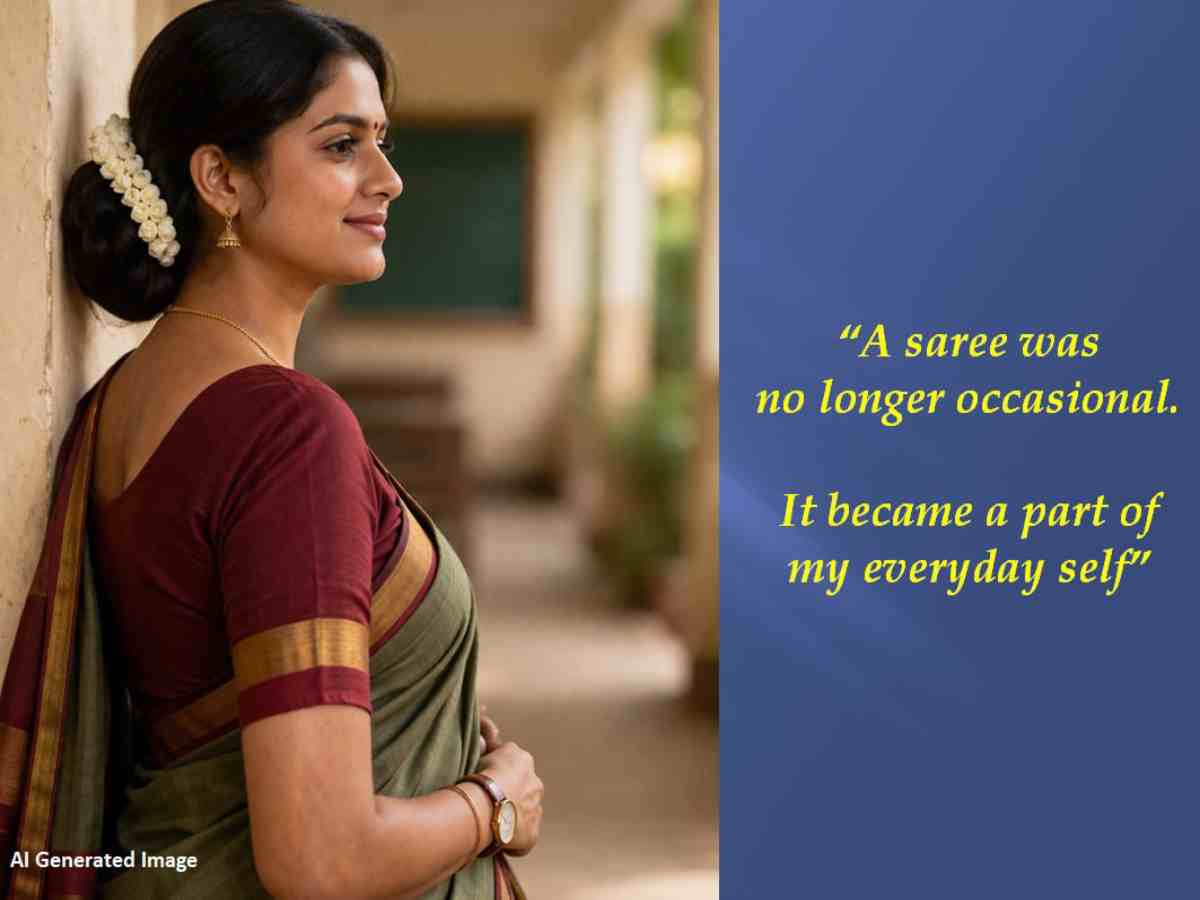
A saree was no longer occasional.
It became a part of my everyday self.
I began to choose with care—
not too bright,
not too loud—
something that would feel gentle
to the eyes that looked at me.
And then,
something beautiful began.
On Fridays,
and on days I wore silk,
my students would come running—
“Miss, you look so beautiful.”
There was no effort in their words.
No intention—only truth.
Even in shops,
voices would say,
“This will look beautiful on you, ma’am.”
I know—
it is a practiced line.
Yet still,
it leaves behind
a small, quiet joy.
And in my life,
there is someone
who never forgets to say—
“This saree is beautiful on you…
you look nice.”
My husband—
he has said it only a few times.
But those few moments
have stayed longer
than many words spoken often.
Because love
does not measure itself
in repetition—
it rests in memory.
And there was another moment—
quiet, sacred,
held close to my body.
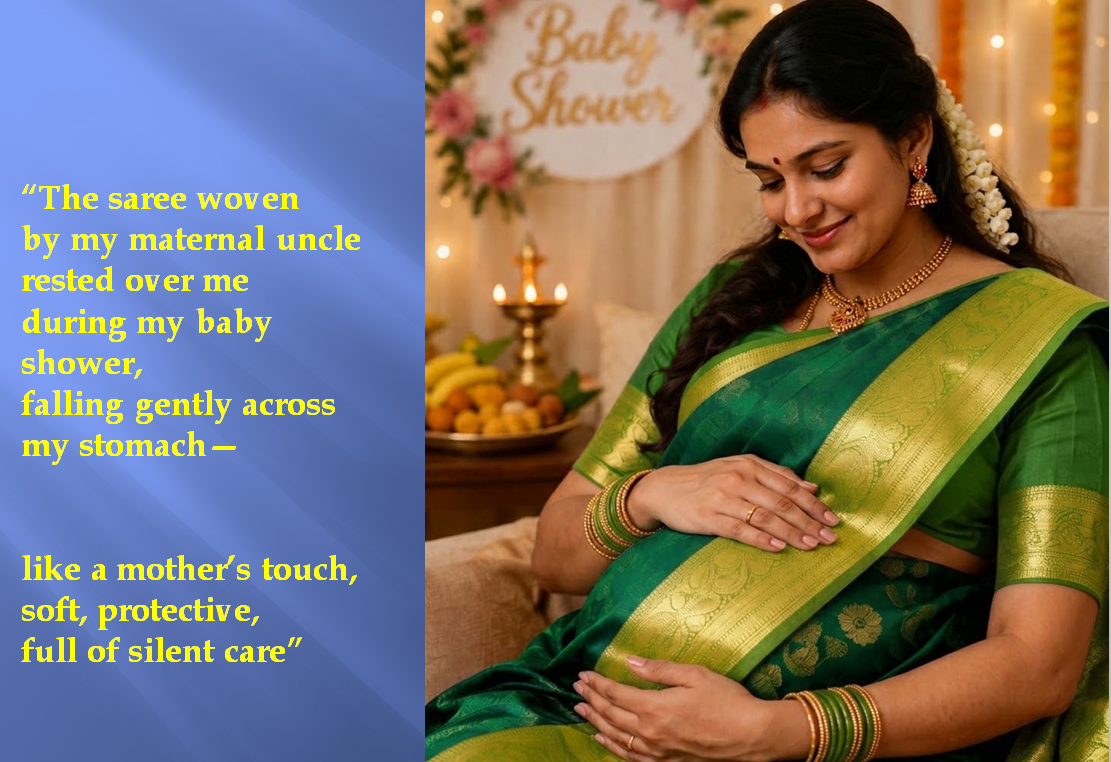
The saree woven
by my maternal uncle
rested over me
during my baby shower,
falling gently across my stomach—
like a mother’s touch,
soft, protective,
full of silent care.
Each thread
felt alive with love—
not just for me,
but for the life
growing within me.
It was not just a saree.
It was their blessing,
their warmth,
their presence—
wrapped around both of us.
Today,
my wardrobe is full.
More than three hundred sarees.
But not one of them
is empty.
Each one holds—
a place,
a person,
a moment.
Even the simplest saree
remembers.
And then,
there are those rare moments—
when a saree transforms you.
When every step softens,
every movement finds its rhythm,
and somewhere within,
a melody begins—
a gentle tune by Ilaiyaraaja,
quietly taking over.
In those moments,
the saree, the song, and I
become one—
where every step
begins to feel
like a line of poetry.
A saree is never asked from everyone.
Only from those
who are close to the heart.
And when it is given with love,
it is worn with love—
again and again—
not for its beauty,
but for its belonging.
Even now,
during festivals,
I receive sarees.
Some are not mine in taste—
yet I wear them.
Because they come
from people
who are mine.
I have my own preferences—
light colours,
soft fabrics,
something that moves with me.
Heavy sarees
have never stayed with me.
I have always wanted
to feel free
even in what I wear.
And I have learned—
the saree I choose
chooses my mood.
Light shades
quiet my mind.
Darker ones
carry a certain weight.
Maybe it is the heart,
maybe the mind—
but it is real.
So no—
a saree is never just clothing.
It is memory,
held in folds.
It is emotion,
resting on the shoulder.
It is love,
pinned gently in place.
waiting,
not to be seen,
but to be felt.
(About the Author: Durgadevi V, Graduate Teacher, GHS Nesal, Tiruvannamalai Dt)
சமீபத்திய செய்திகள்
Nellai Special: வாழை இலை விருந்தும்.. நாவில் கரையும் திருநெல்வேலி சொதிக்குழம்பும்!
ஜெம் வீரமணி போக்சோ வழக்கு: விசாரணைக்காக சிறப்பு புலனாய்வு குழு (SIT) அமைப்பு
தலையங்கம்: சிறுமிகளுக்கு எதிரான கொடூரம்.. அயோக்கியர்களின் கொட்டத்தை அடக்க வேண்டும்!
ஏகாதசி விரதத்தின் மகிமை அல்லது அம்பரீஷ மஹாராஜாவின் பக்தி!
கீழ்வானம் செந்நிற ஆடை அணிய.... மலர்கள் சோம்பல்முறிக்க...!
திருமலை குமாரசுவாமி திருக்கோவில்.. குன்றின் மீதமர்ந்து.. அருள் பாலிக்கும் முருகப் பெருமான்!
"நல்லதே நினைப்போம் நல்லதே நடக்கட்டும்".. கதை அல்ல நிஜம் (2வது பகுதி)
Puzzle: அந்தாதி வினா விடை.. வர்றீங்களா விளையாடலாம்?
Story by Pooranavalli Sekar: பொறுமை.. ஒரு நிமிடக் கதை (20)

{{comments.comment}}